
Deep Sea Mining: A New Frontier for Corporate Opacity and Undue Influence
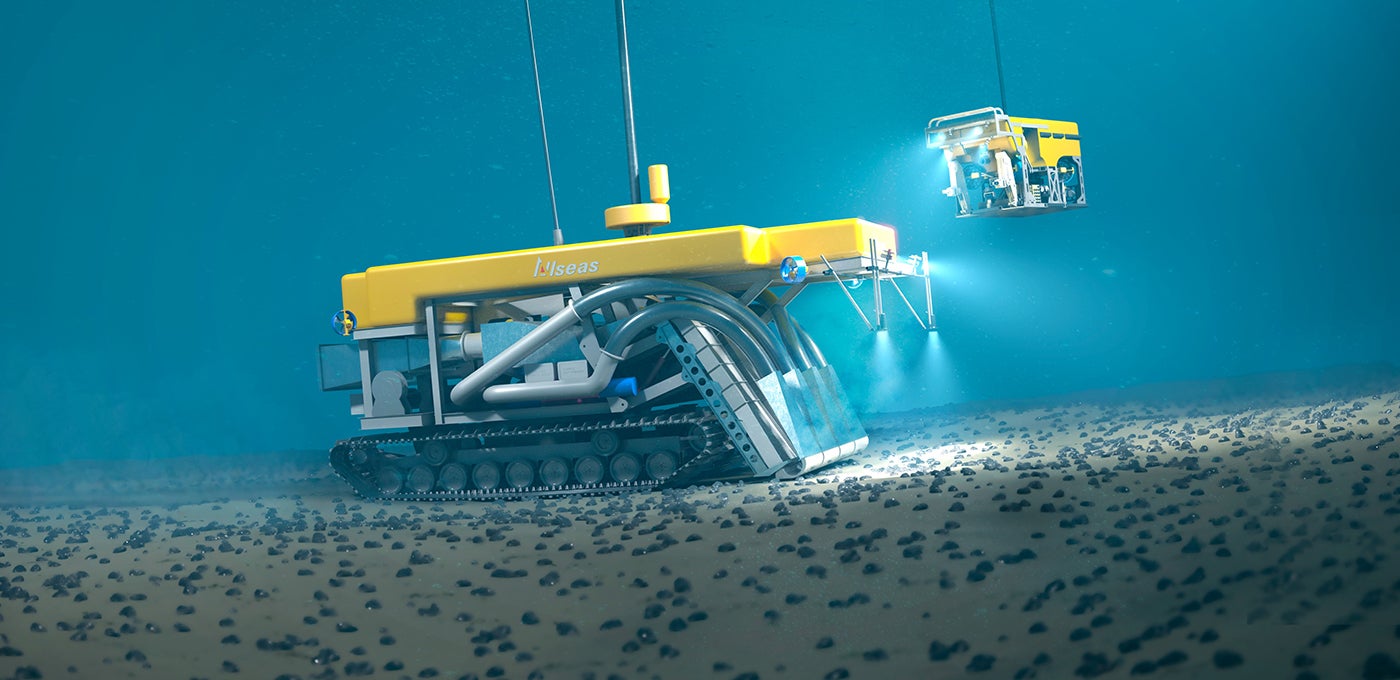
The deep sea bed is among the last truly unexplored spaces on earth: an alien world of incandescent creatures that have adapted to the total darkness and bone-crushing pressure of the deep. It is also the site of a new frontier in the race for critical minerals and control over the supply chains for manufacturing everything from EV batteries to drones.
Vast swathes of the seabed under the Pacific and other oceans are scattered with polymetallic nodules: mineral-rich lumps of rock formed over millions of years around an organic nucleus such as a tooth or piece of bone. The exact make-up of these nodules differ in different areas, but typically they contain metals such as manganese, iron, nickel, copper and cobalt.
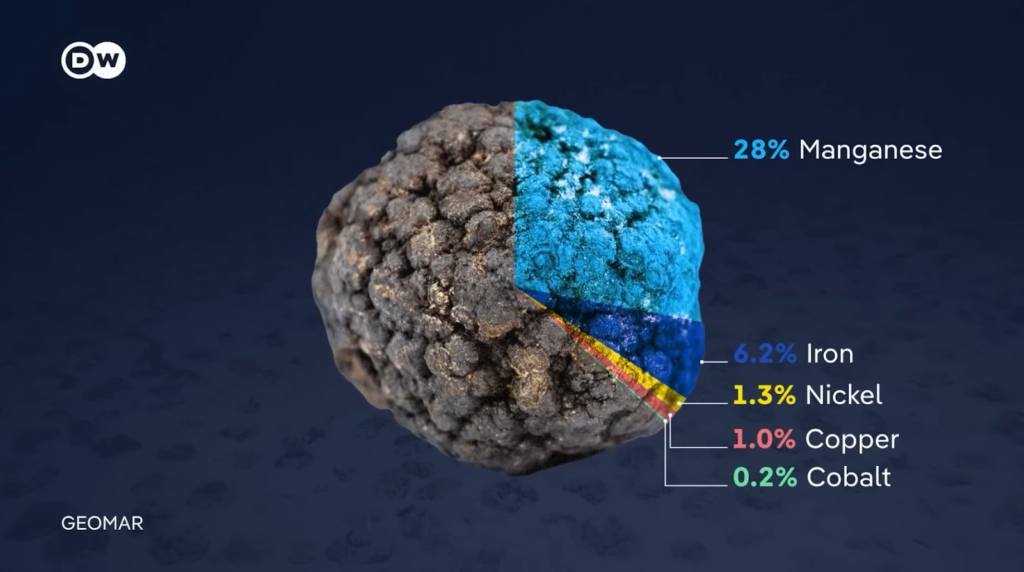
Example of the composition of a polymetallic nodule: Image by Deutsche Welle
For decades, companies and governments have explored the deep seabed to study these nodules and attempted to developed technology to extract them, as well as other mineral resources such as mineral-rich cobalt crusts and the seafloor massive sulfide deposits at volcano-like hydrothermal vents. Critics, however, say that the potential environmental damage of mining the deep seabed far outweigh the potential benefits, and would cause long-term damage to eco-systems that play a still little understood role in the ocean’s food chains, oxygenation and carbon cycles.
ACDC has been collaborating with investigators from Deutsche Welle and Greenpeace Investigativ to examine the nascent deep sea mining industry as companies seek to secure international and national regulatory frameworks that would allow commercial mining to begin.
Getting ready to dive
While 40 countries have called for a moratorium on deep sea mining, several others have issued licenses or are reviewing applications for exploration in their Exclusive Economic Zones (EEZ). These include Cook Islands, Japan, Papua New Guinea, Saudi Arabia and the USA. Norway was poised to issue licenses but in late 2024 plans were shelved until 2029 after political opposition and advocacy from environmental campaigners.
In international waters, rights to seabed minerals are governed by the United Nations Convention on the Law of the Seas (UNCLOS). The International Seabed Authority (ISA), an international body established in Kingston, Jamaica, when UNCLOS came into force in 1994, allocates license areas in certain nodule-rich zones under the high seas to countries, reserving some for countries in the Global South in a bid to ensure an equitable distribution of any future mining revenue. Governments that have been allocated a license area can sponsor private companies to explore and eventually exploit the metals on the seabed.
For years, the ISA has been working on regulations that would allow commercial exploitation to begin. Nauru and its corporate partner Nauru Ocean Resources Incorporated (NORI), a subsidiary of The Metals Company (TMC), a Canadian deep sea mining company, have attempted to accelerate this process by invoking a provision that they argue should set the ISA a deadline of two years to finalize rules for mining after a company submits an exploitation request.
Importantly, the U.S is not a signatory to UNCLOS and not bound to the ISA regulatory process. In April, President Trump issued an executive order ordering the U.S. government to accelerate the licensing process in U.S. territorial as well as international waters. Bills in the House and Senate and new processes initiated by the Department of Interior are attempting to formalize the edict into government practice. Since the executive order, the three major North American deep sea mining companies – TMC, Impossible Metals and Odyssey Marine Exploration – have submitted applications for license areas in U.S. territorial or international waters.
Like darkness, opacity reigns on the sea floor
On land, multi-stakeholder initiatives such as the Extractives Industry Transparency Initiative and multiple civil-society led programmes have attempted (with different results) to counter the high risk of corruption in the mining industry. The relative ease of accessing terrestrial mining sites, whether on foot or with drones, often helps journalists and NGOs draw attention to abuses. But at depths of 5,000 meters, experts warn, any wrongdoing in deep-sea mining would be almost impossible to detect or monitor effectively.
Although many players in the deep sea mining industry, and their backers, are linked to terrestrial extractives, similar transparency has not reached mining practices on the sea floor. The details of contracts and revenue share agreements between states and the companies they sponsor are generally not publicly available. Of the 13 countries sponsoring corporations to explore an ISA-regulated area, or issuing exploration licenses in their respective EEZ, only Papua New Guinea and the UK are EITI implementing countries.
A recent paper published in the Review of International Political Economy argues that “the capacity of international actors to prevent or effectively regulate the ecological and social harms of deep-sea mining is challenged by the opacity and mutability of corporate structures.” The authors argue that this opacity transfers risks to sponsoring states and local communities, and undermines the goals of UNCLOS to fairly distribute seabed riches between richer and poorer nations.
To understand the risks of undue influence and hidden financing in the industry, ACDC worked with investigators from Deutsche Welle and Greenpeace Investigative to map key players in the industry, their connections and activities. Our review of the corporate structures involved in the industry aligns with the findings of the paper mentioned above. Some of the for-profit entities with a license to explore ISA-regulated zones are state-owned enterprises, notably from Brazil, China, the Cook Islands, Japan and Kiribati. Overall, however, private corporate interests, mostly from the Global North, dominate.
Additionally, several countries which have delegated exploration of their ISA license areas to corporate entities are small states with low capacity, raising questions about their ability to regulate or control their corporate partners should mining begin. In particular, small island Pacific states like Nauru, Tonga, Cook Islands, Kiribati and Solomon Islands may lack capacity to effectively regulate and hold accountable well funded corporate interests.
It is important to recognise that companies holding or seeking licenses rarely act alone. Backing them are businesses from industries including offshore fossil fuel infrastructure, shipping and maritime services, mining, and finance. These backers act as parent companies, significant investors, services providers, strategic partners, or a combination thereof.
An emblematic case is that of AllSeas, an offshore energy infrastructure company headquartered in Switzerland. AllSeas is a significant investor in The Metals Company and acts as TMC’s strategic partner, providing the support vessel for exploration operations in the Pacific, where it holds licenses through subsidiaries in Nauru and Tonga. The Metals Company has also applied to the U.S. for a license to explore the same areas.
A subsidiary of AllSeas, Allseas Subsea Minerals Holding SA is also the parent company of Blue Minerals Jamaica, which is sponsored by Jamaica to explore its license area in the ISA-regulated Clarion Clipperton Zone (CCZ). The ties between Blue Minerals Jamaica and AllSeas were made apparent by civil society investigators at the Environmental Justice Foundation, who identified common directors between the two companies.
Influence in Washington
Impatient for regulation from the ISA that would allow exploitation of international waters, several companies hoping to collect seabed minerals have invested in influencing decisionmakers in Washington.
At least five companies with a commercial interest in deep sea mining have been lobbying Washington since 2020, spending more than $1.5 million, according to our analysis of Lobbying Disclosure Act filings together with Greenpeace Investigativ.
These include Global Seabed Mineral Resources NV (GSR), a subsidiary of DEME Group, a Belgian offshore energy contractor. GSR and its investor Transocean Deepwater Drilling Inc., paid the same lobbyists more than half a million dollars between 2023 and mid 2025.
Transocean is also a strategic partner of Moana Minerals, a subsidiary of Ocean Minerals, and one of three companies with a license to explore the Cook Islands’ EEZ. In 2023 and 2024, Moana Minerals spent $30,000 per quarter on lobbying that included advocacy for “expanded US investment in the Cook Islands in support of responsible, sustainable development of critical minerals and rare earth elements.”
Moana Minerals CEO Hans Smit, told Seabed Spotlight, a specialist newsletter, that this lobbying under the previous administration had not borne fruit. But – “Thanks to Donald Trump for making this front and center” – in August, the U.S. and the Cook Islands signed a cooperation agreement on seabed minerals. As a result, in October, EV Nautilius, a renowned scientific research vessel, surveyed the seabed in the territorial waters of the Cook Islands under the auspices of the U.S. National Oceanographic and Atmospheric Agency (NOAA).
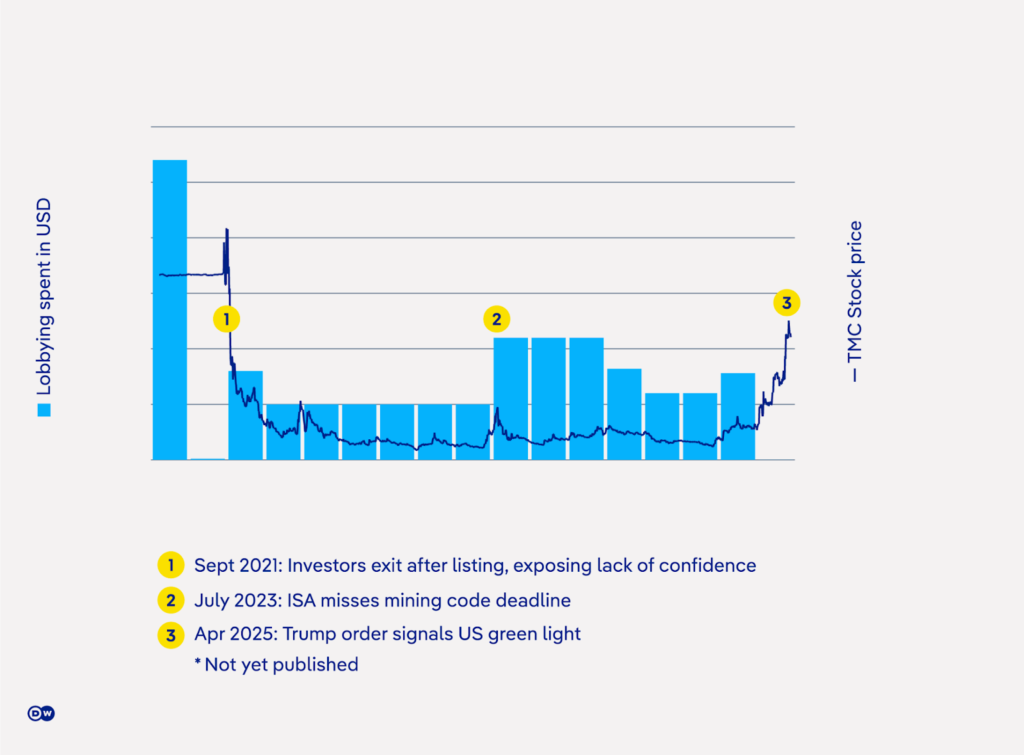
Issues related to Trump’s April executive order are listed by a lobbyist for TMC on its disclosure for the first quarter of 2025. Writing in Deutsche Welle, investigative journalist Serdar Vardar linked TMC’s lobbying spend to key regulatory moments and the company’s publicly traded stock price. TMC appears to have increased its investment in influencing politicians in Washington in mid-2023, when the ISA missed a contested “deadline” to finalize regulations for exploitation following an earlier application by Nauru, where TMC holds a license through NORI.
Soon after Trump issued the executive order, Impossible Metals, a U.S./Canadian start-up backed by several tech industry investors, submitted an unsolicited application to the Department of Interior for a license area in American Samoa. The Governor of American Samoa had earlier issued an executive order prohibiting deep sea mining in the territory, but Impossible Metals, whichcounts Francis Fannon, ‘Energy Ambassador’ in the first Trump Administration, among its strategic advisors, has applied to the federal government instead. The company has also announced plans to collaborate with the German Federal Agency for Geosciences and Natural Resources, BGR which holds a license area in the Pacific, to test its nodule collector. Bahrain recently sponsored Impossible Metals in an ISA application for a license area.
A public consultation on Impossible Metal’s application issued by the Bureau of Ocean Energy Management was flooded with thousands of opposing comments, including objections from the American Samoan authorities. At the same time, new mining start-ups including Wetstone and the Houston-based Mithril Mining also took the opportunity to inform the Department of Interior of their mining technology. Wetstone also began lobbying congress earlier this year.
The International Framework
The ISA is by no means immune from corporate influence, either.
Climate Home News has previously reported that at least 33 corporate lobbyists attended the crucial 2023 ISA meetings as part of national delegations.
In the years since, senior executives from GSR, TMC and AllSeas have all attended ISA meetings as part of national government delegations. This year, the CEO and Chief Revenue Officer of Impossible Metals were listed as advisors to the Interocean Metal Joint Organization, an international group comprising Bulgaria, Cuba, the Czech Republic, Poland, Russia and Slovakia.
The former Secretary General of the ISA, Michael Lodge, was accused of having inappropriately close ties with the industry, even appearing in publicity materials for DeepGreen, the precursor company to TMC. Delegates from Germany, Costa Rica and other diplomats accused Lodge in 2023 of pushing delegates to approve commercial mining. Lodge rejected the allegations.
Sustainable Investment?
Wary of the unknowns and buoyed by a growing moratorium by national governments, environmental campaigners have won commitments from several banks not to finance deep sea mining activities.
However, analysis by Deutsche Welle and Greenpeace Investigativ shows that several of these banks are nonetheless financing the industry through investments in publicly listed companies that partner with the industry, and even in independent pure-play deep sea mining start-ups. The banks include BNP Paribas, Deutsche Bank, UBS / Credit Suisse and Crédit Agricole.
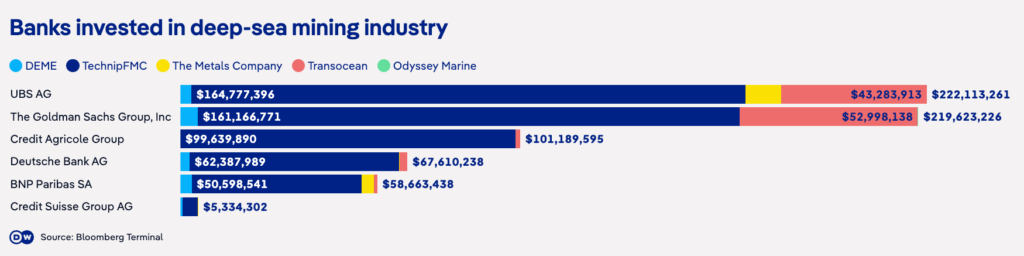
Storebrand is the only bank to truly divest after its commitment, DW reports, saying the situation for the other banks is “akin to refusing to finance an oil drilling site for climate reasons but still buying shares in the drilling company.”
Other contradictions abound. Norway’s Adepth Minerals was one of three companies that applied to mine an area of Norway’s EEZ near the Arctic. Adepth Minerals is owned by DeepOcean, which was acquired by PE firm Triton via its Triton IV fund before being spun off into a single-asset continuation vehicle in 2025. According to data from Pitchbook, investors in the Triton IV fund included the California Public Employee’s Retirement Fund and California State Teacher’s Retirement System. In 2022, California effectively banned deep sea mining in its waters. According to data from Bloomberg, however, the State of California itself is also an investor in Transocean, a significant backer of deep sea mining through its lobbying and partnerships with Moana Minerals and GSR.
Greenwashing the deep
Academic researchers have described the emerging deep sea mining industry as paradigmatic of “growing distance in environmental governance,” referring not just to the geographic space and ocean depths that separate mining sites from outsiders, but “relationships of capital, debt, and investment, with a proliferation of actors, the abstraction of physical materials into tradable commodities, and a geographically dispersed and difficult-to-track set of owners and financial actors.”
As an industry that is not yet generating revenue and reliant on investor capital as well as favourable regulation, the deep sea mining industry appears to be extremely concerned with its public image.
The mere announcement of our workshop on deep sea mining at a climate journalism conference spurred the CEO of Impossible Metals to leave a comment promoting the sustainability of their technology. He was joined by the head of an American Samoa business group hoping that the U.S. territory will become a hub for processing and refining seabed minerals if Impossible Metals secures a license in the territory.
The industry’s tactics go further. A consortium of seabed mining interests has published a website which selectively quotes and reframes critical science to soften negative implications for the industry.
Continued scrutiny of the industry is essential. Thankfully, there is momentum. During our research, Global Fishing Watch and Benioff Ocean Science Laboratory published a public tool allowing users to track maritime activity in ISA-regulated license areas. This largely replicates an approach Data Desk had built separately as part of our project.
As the industry seeks to move from exploration to extraction, the scrutiny this and other tools allow will be all the more important.
The production of this investigation was supported by a grant from the Investigative Journalism for Europe (IJ4EU) fund.
Correction 12 February 2026: An earlier version of this article mistakenly named Green Minerals as the owner of Adepth Minerals.
Related Articles
 Investigations
An American oligarch acquires critical energy infrastructure in Germany
A notorious donor to Donald Trump and the broader MAGA movement recently acquired a significant portion of Germany’s energy infrastructure.
 Investigations
Private funds link pension holders to Russian oil and gas supply chains
If you’re an American or Danish pension holder, there is a chance some of your money has helped Russia get its oil and gas to market since the invasion of Ukraine.
 Investigations
Defusing a “carbon bomb” in Siberia
Throughout 2023, members of the Anti-Corruption Data Collective have examined how Western firms have supplied hardware and engineering services to Arctic LNG 2, a massive and highly strategic liquefied natural gas project in the far north of Siberia. Investigations published this week reveal new details of European firms’ support for the project since Russia’s invasion of Ukraine. Yet financial secrecy continues to hinder efforts to follow the money.