

Journalists in Czechia have used data provided by ACDC to map the assets of sanctioned and politically exposed persons from Russia. A famous spa town stands out.
Karlovy Vary, or Carlsbad, in the Czech Republic is famous for its UNESCO-protected hot springs and baroque architecture. First becoming popular with European aristocracy and celebrities in the 19th century, today Karlovy Vary appears to be a hotspot for Kremlin-linked Russians, based on a new project by independent Czech investigative newsroom Investigace.
Journalists used data provided by ACDC to map real estate and companies across Czechia linked to Russian citizens under sanctions, people connected to sanctioned Russian businesses and individuals, as well as members of pro-Kremlin organizations and politically exposed persons implicated in past corruption cases. Unsurprisingly, most are concentrated in Prague. However, Karlovy Vary, with just 49,000 inhabitants, has the other significant cluster.
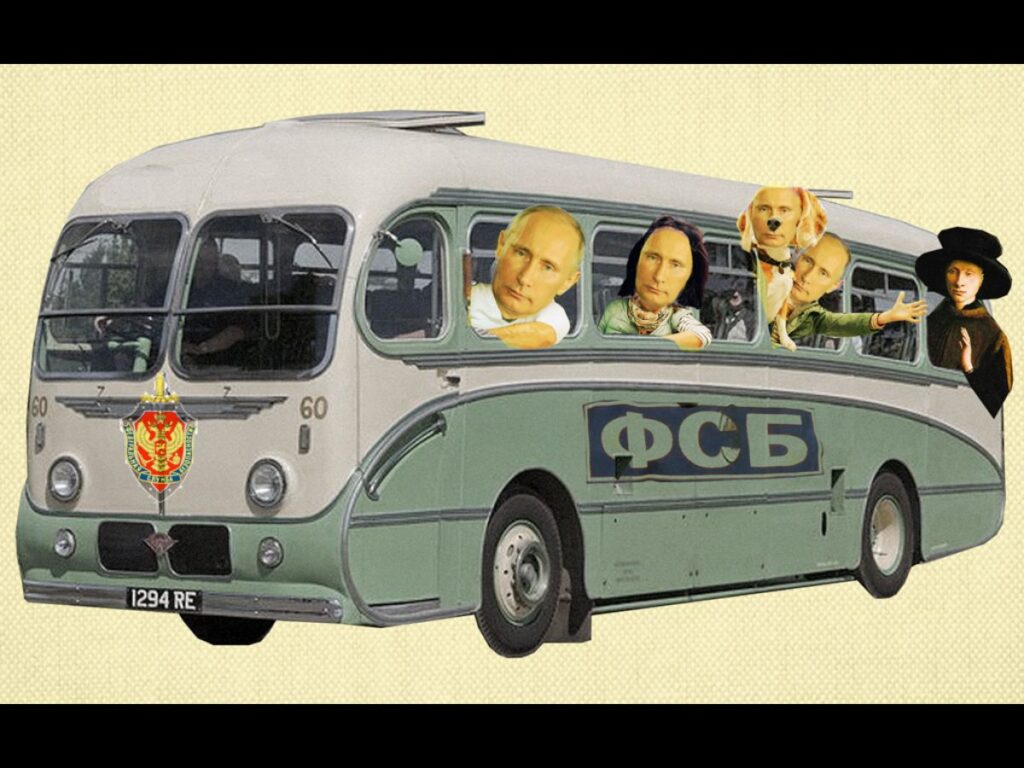
Map of assets of politically exposed persons from Russia
Investigace.CZ
Among the individuals linked to the town is Alexandra Tyagacheva. Investigace reports that she “runs a family ski resort near Moscow, where the Russian political elite, including Vladimir Putin himself, go to ski. Her ex-husband is Putin’s advisor.” According to Investigace, Alexandra Tyagacheva is the managing director of a company which owns an apartment in Karlovy Vary. The apartment was reportedly bought by her mother, Svetlana Tyagacheva, who owned the company until 2020. Svetlana Tyagacheva is herself “a United Russia MP and the chairwoman of the Union of Orthodox Women, which promotes conservative pro-Kremlin propaganda.”
Also owning property in Karlovy Vary is Leonid Soroka, “chairman of the Yugorsk branch of the Combat Brotherhood organization. It is the largest Russian organization uniting former soldiers. It is also engaged in patriotic education, supports the Russian war in Ukraine, and its top leaders are sanctioned,” writes Investigace.
Another person linked to Karlovy Vary: Vadim Ligai, deputy director of a sanctioned Russian company that manufactures helicopters, including for Russia’s war against Ukraine, according to Investigace. “Between 2014 and 2018, Ligaj also worked in politics as a member of the Council of the Republic of Tatarstan.”
“Vadim Ligai’s family has had a company called ZELANT Trade in the Czech Republic since 2005, through which it owns a house in Karlovy Vary. One of his sons, who co-owns the Czech company, is the deputy director of a company that produces adhesives and foils for the arms industry and aviation. This company was sanctioned by Ukraine. It is co-owned by a woman who is also on Ukraine’s sanctions list, heads one of the Russian banks, and owns two companies in Crimea.”
These are just a few of the 25 profiles published as part of the project.
In Prague, a company is registered with a beneficial owner under EU sanctions. Nshan Galustyan, better known as Mikhail Galustyan, is a famous entertainer sanctioned for his role as a propagandist, which includes a leadership position at Yunarmiya, a paramilitary organisation. Investigace reports that the company, 1. EST-AR, s. r. o, of which Galustyan is listed as the beneficial owner, does not show as frozen in the Czech corporate register.
Previously, Investigace used the same data from ACDC to reveal that a Russian police chief in occupied Ukraine, who is accused of abducting and torturing civilians, is the co-owner of a company registered in Brno. An expert from the Czech chapter of Transparency International said the company’s declared financial activity – loans issued and received with matching values – is reminiscent of companies used in money laundering schemes.
There is no suggestion that the current or past ownership of real estate properties mentioned here breach any Czech or EU laws or regulations. Alexandra Tyagacheva, Svetlana Tyagacheva, Leonid Sorok are not under sanctions. Neither ZELANT Trade nor the son of Vadim Ligai have been sanctioned by Czechia or the EU.
However, Czech and EU officials should use Investigace’s map of Russian PEPs’ assets in Czechia to research potential new sanctions and asset freezes. In general, sanctions are meant to have a meaningful impact on the companies and individuals they target, allowing assets in the sanctioning jurisdiction to be frozen, preventing travel to derive benefit from the assets, or removing opportunities to do business in or with the sanctioning jurisdiction. The assets revealed by Investigace may help strengthen the case for sanctions to be imposed on some of the individuals profiled.
ACDC’s contribution
ACDC downloaded the Czech beneficial ownership (BO) register shortly before public access was scheduled to be removed in late 2025. Partners in Czechia had told us that although the register had been freely available for some time, its usefulness to journalists looking for PEP-linked assets had been limited due to an unwieldy array of fields and important information being missing.
We wanted to help unlock investigations using the Czech BO registry, so we first combined all filings for legal entities (companies, non-profits, etc.) and all individuals associated with them (shareholders, managers, etc.) over the past twenty years. This produced new structured datasets at both the entity and person levels, which we used to fill in missing address and birth date information for millions of individuals whose original records lacked those details. Finally, we performed some basic data standardization techniques to clean those databases before screening all names with a connection to Russia using a variety of PEP databases. Investigace used data from Scanner Project and RUPEP to further find and verify connections.
Lessons for Useful Beneficial Ownership Data
Not just in Czechia but across Europe, publicly accessible beneficial ownership registers have been going offline as authorities align their systems with a controversial 2022 EU Court of Justice ruling that struck down public access. These public resources are gradually being replaced by “legitimate interest” access regimes, after the 6th AML Directive recognized the importance of academics, journalists and civil society investigators being able to access this data.
But the Czech example shows us that access is not the whole story.
For beneficial ownership data to be usable to journalists investigating corruption, sanctions evasion, money laundering and other financial crimes, it needs to be designed with these use-cases in mind. That means data should be complete, well-structured and machine-readable. Interoperability is another key concept, allowing different national and institutional systems to exchange data and to interpret it consistently across these different contexts. The work ACDC did to make the Czech data more useful for journalistic investigations highlights the gap many registers have to fill to meet these standards.
Collaboration is Key
Especially where national beneficial ownership registers do not yet meet the ideal standards, collaboration across professional silos can make it far easier for independent anti-corruption actors to get the most out of BO data. Through the Illicit Finance Data Lab initiative, in partnership with the Organized Crime and Corruption Reporting Project (OCCRP), ACDC has been exploring how academic data processing methods can support journalists with their dirty money investigations using both public and private data.
Like ACDC itself, the Data Lab is predicated on the idea that combining diverse but complementary professional skills and expertise is the best way to extract maximal value from the enormous quantity of data that can illuminate dirty money flows. As well as testing approaches and learning from new collaborative projects – including our work on the Czech BO data – the Data Lab has produced guidance for journalist-researcher collaborations including tools, templates and tip-sheets. As we prepare for the next phase of the Data Lab, tell us: what would make such collaboration easier for you or your organisation? team@acdatacollective.org

Related Articles
 Investigations
The New Influence Machine
To gain influence in Washington, high-risk foreigners are turning to personal lobbyists rather than big firms.
 Investigations
Profiting from War: Mysterious Bets on Polymarket
Some Polymarket users are making a lot of money by placing high-risk bets on wars. Research reveals patterns indicative of possible insider trading.
 Investigations
An American oligarch acquires critical energy infrastructure in Germany
A notorious donor to Donald Trump and the broader MAGA movement recently acquired a significant portion of Germany’s energy infrastructure.