
Gambling on
Democracy
The 2026 midterms were the first U.S. congressional elections since prediction markets became mainstream. Structural risks of insider trading, price manipulation and election disinformation were not outweighed by predictive accuracy. The three big prediction market platforms – Kalshi, Polymarket and Polymarket US – were only marginally more accurate than established forecast models. Meanwhile, 1% of Polymarket wallets took 91% of the profits and the platforms collected an estimated $11.7M in fees.
Platform data current to 15 November.
More in this series:Briefing 1: The Midterms on Prediction Markets, Briefing 2: Price Vulnerabilities in Prediction Markets, Briefing 3: Insider information in election prediction markets, Briefing 4: A Midterms Update and the Global Picture,
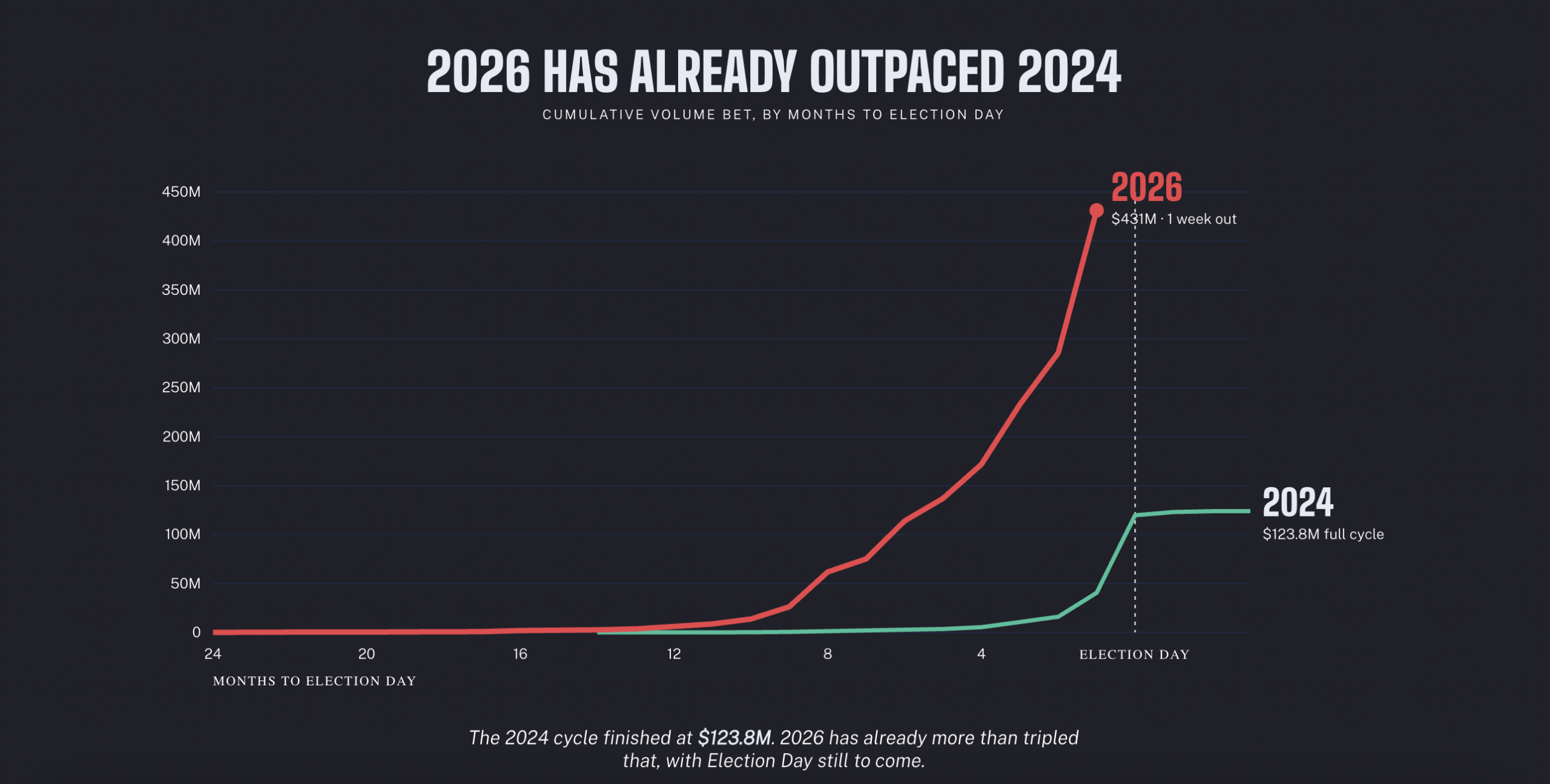
2026 outpaced 2024
Five races swallowed the money
The top 1% dominated volume, and profits
of profits won by the top 1% of Polymarket wallets
Prices could be moved for cheap
*Change in share of markets since our first briefing, when 57% could be moved for under $1.
Cost is the notional amount required to move the visible price five cents. Data from all congressional midterm markets on Polymarket, Kalshi and Polymarket US current as of 29 October 2026.
Market questions created potential for insider trading
Platform data current to 15 November.
